
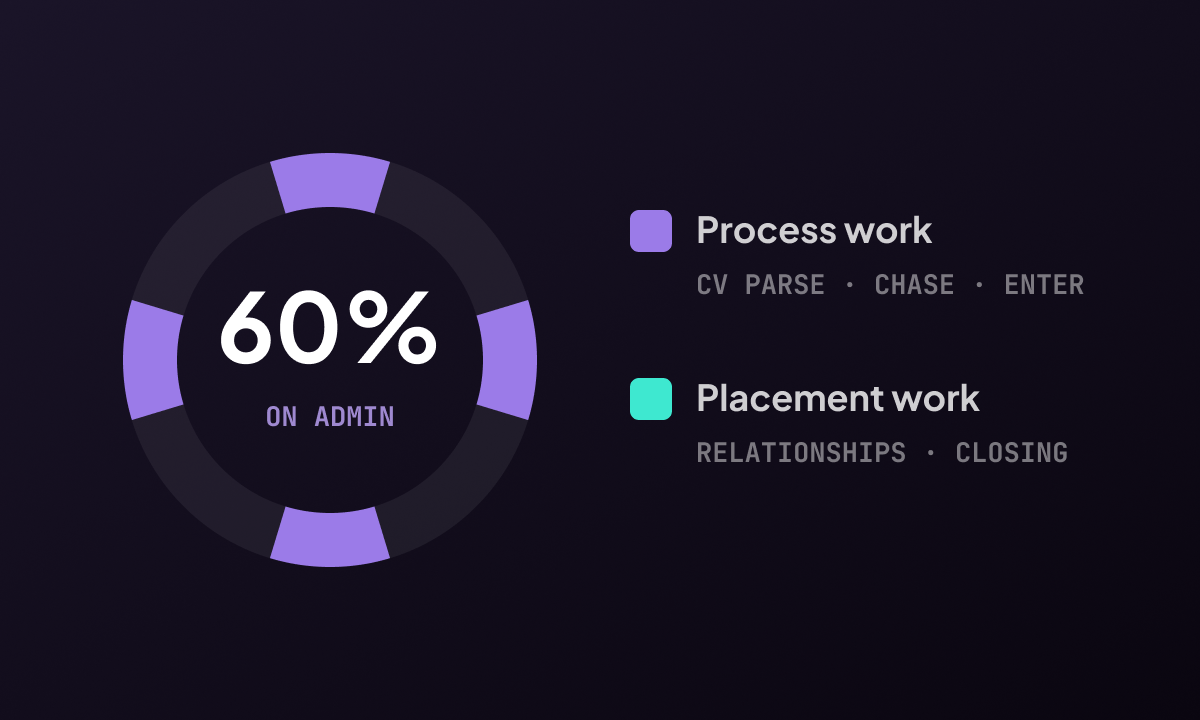
One platform or five tools? The question every CXO is answering wrong
How the five-tool stack became the default
The modern enterprise HR and talent stack evolved organically. The ATS was bought when hiring became a bottleneck. The HRMS came in when headcount grew past the point where spreadsheets worked. Performance management, payroll, and engagement all arrived as separate purchasing decisions, made at different times, by different teams, with different priorities.
The result is a collection of point solutions that each do their job adequately and none of which were designed to share data naturally with the others. Every integration is a maintenance overhead. Every export is a potential discrepancy. Every system update is a risk that the sync breaks in a way nobody notices until the next reconciliation meeting.
What the data problem actually costs
The obvious cost is time. The reconciliation meetings, the manual exports, the analyst hours spent assembling one coherent view of the workforce from five systems that do not agree. That cost is real and measurable, even if most organisations have stopped trying to measure it.
The less obvious cost is decision quality. Workforce planning, cost forecasting, attrition modelling, and headcount allocation are all downstream of data. When the underlying data is assembled from multiple systems with different update cycles, the decisions made from it are decisions made on an approximation.
AI makes this problem more acute, not less. Every analytics capability in a workforce platform is bounded by the data it can access. An AI that reads an HRMS export, an ATS export, and a finance export from different dates produces intelligence that reflects the exports, not the reality. The sophistication of the model cannot compensate for the incompleteness of the inputs.
What one data model actually changes
A single data model means the candidate record, the employee record, and the financial record are not separate entities that are synchronised. They are the same record, updated once, visible consistently across every function that needs it.
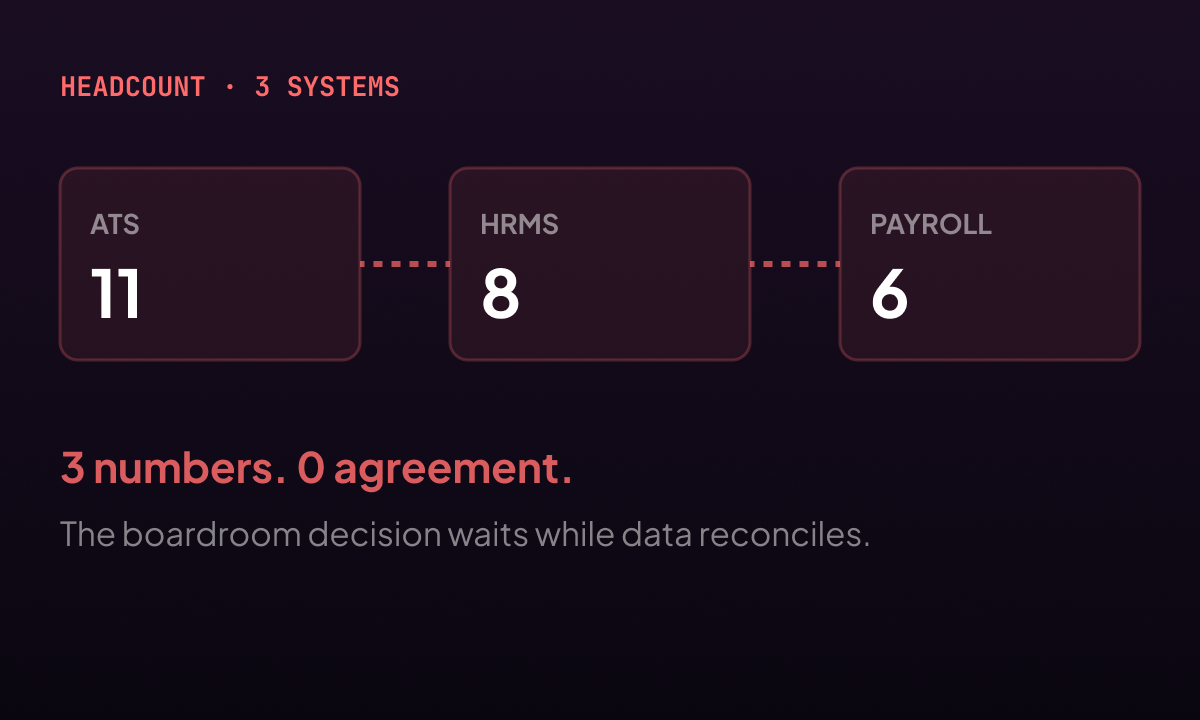
This changes the quality of every decision an organisation makes about its workforce. Workforce plans reflect reality. Cost forecasts match what payroll will actually produce. When a CHRO and a CFO look at headcount, they are looking at the same number because there is only one number to look at.
LinnkIQ is built around this principle. One intelligence across the full workforce journey, from the first conversation with a candidate to the last day of employment, without re-entry, without reconciliation, without a dashboard that obscures the disagreement underneath it.
The test worth running today
Pull your current headcount number from three different systems in your stack. Your ATS, your HRMS, and your finance platform. If they agree, your integrations are working unusually well. If they do not agree, you have located exactly the problem this article describes. The question is not which number is right. The question is why there are three numbers at all.
"Every system in your workforce stack is probably working. The problem is what happens in the gaps between them."